
Asian Infrastructure Investment Bank
The Asian Infrastructure Investment Bank(BAII; English acronym: AIIB), is a investment bankproposed by the People’s Republic of China in order to compete with the International Monetary Fund (IMF), the World Bank and the Asian Development Bank1 to address the growing need for infrastructure in Southeast Asiaand Asie centrale. This bank is part of the New Silk Road strategy developed by China. BAII’s activities As of January 2020, the BAII has 102 member countries and potential members, including 57 founding members including Australia, China, France, Germany, India, Italy, South Korea, and the UK. As of January 2020, BAII has approved over $12 billion in funding for 64 projects and maintains a list of proposed projects. BAII has received AAA credit ratings from S&P, Moody’s and Fitch. The BAII positions itself as a “lean, clean and green” institution. It maintains this vision in the projects it funds and in its organizational structure, including a commitment to a lean staffing model and a non-resident board. The BAII has adopted the operating framework, governance structures and best practices of existing international financial institutions. For example, in March 2017, the BAII adopted the list of individuals and companies sanctioned by all MDBs. The BAII has also established a set of rigorous policies and guidelines, including a Risk Management Framework and an Environmental and Social Framework to support the achievement of social and environmental sustainability outcomes. History Established in January 2016 and located in Beijing, the Asian Infrastructure Investment Bank (IIB) is a multilateral development bank (MDB) focused on economic development through infrastructure financing in Asia. With total capital of US$100 billion and a focus on sustainable infrastructure, transnational connectivity, and private capital mobilization, the IAB complements other development efforts in the region The idea of creating this bank was first mentioned in October 2013, during a visit by Chinese President Xi Jinping to Indonesia. The objective is to promote the development of Asian countries and regional economic integration by meeting infrastructure needs. It is also about building international financial institutions that are less dependent on the United States and strengthening the role of regional actors in decision-making. Emerging countries feel under-represented in existing financial institutions. The reform will have increased China’s voting rights from 4 to 6.4 per cent, which would have placed it just behind Japan but still far behind the United States, whose share would have decreased only slightly from 17.7 to 17.4 per cent. This would have allowed the BRICS countries to be among the 10 countries with the highest quota share, at the expense of Canada in particular. Although signed by U.S. President Barack Obama in 2010, Republicans in the U.S. Congress refused to ratify this International Monetary Fund 2,3 (IMF) reform bill. This blocking is an important element that explains the success of EBIT4,5,6. In general, the BAII, on paper, is trying to repair perceived flaws in the World Bank, the Asian Development Bank, and other development institutions that have been criticized by China for being too unwieldy and too controlled by the United States and other rich nations 7. In 2014, the U.S. voting power in the IMF 8 and World Bank 9 was 16.75% and 16.21%, respectively (only 3.81% and 4.85% for China). This gives the United States a de facto veto power. For the Asian Development Bank, the voting rights of the United States and Japan are 15.56% and 15.67% respectively and 6.47% for China. In contrast, no single country will have veto power in the new BAII 10. This change in voting rights was the key to gaining European support. In October 2014, a ceremony to launch the facility was held in Beijing. Twenty-one countries sign a memorandum of understanding to build the Asian Infrastructure Investment Bank: ChinaIndia, the Thailand, the Malaysia, Singapore, the Philippines, the Pakistan, the Bangladesh, the Brunei, the Cambodia, the Kazakhstan, the Kuwait, the Laos, the Burma, the Mongolia, the Nepal, theOman, the Qatar, the Sri Lanka, theUzbekistan and Vietnam11. Indonesia signed the MOU in November 2014 and became the 22ndfounding country. These countries decide to offer the possibility to other countries to become founding members, subject to acceptance by the members already present, by submitting an application before 31 March 2015. On March 11, 2015, Luxembourg was the first non-regional country to announce its desire to become a founding member of the Bank. The next day, the United Kingdom, followed by France, Germany and Italy announced their desire to become members of the Asian Infrastructure Investment Bank 12. Switzerland did the same a few days later 13 and Russia also announced its agreement in late March 2015 14. As for the 57 member countries, Japan is the only major economy in Asia not to apply for membership. Taiwan also requested it, but it was rejected. Even North Korea has applied for membership, but much more economic transparency would have been needed for it to join the bank. Almost all of Western Europe, except Ireland, has officially joined the BAII. The United States, Canada and Mexico have all refused to join, with Washington being particularly critical of the new project, including lobbying its allies not to join. Fourteen European countries – including Great Britain, France and Germany – joined the project in scattered order. For researcher Christophe Jaffrelot, director of research at CERI in Paris, “Beijing will probably manage to forge alliances that will allow it to enjoy a majority coalition within the BAII. But not playing along with this initiative would have been even more counterproductive 2. » On December 19, 2018, the Board of Directors of the Asian Infrastructure Investment Bank (AIIB), validated the application of six new members, including Algeria, Ghana, Libya, Morocco, and Togo 15. On March 19, 2018, Canada officially joined the BAII with a 2-year term as one of 12 directors on the BAII Board of Directors starting in July 2018 16. Geopolitical considerations and governance In terms of geopolitics, all the BRICS states – Brazil, Russia, India, China and South Africa – have joined
The bank of bric, new avatar of a multipolar world order
Quite a symbol: 70 years after the Bretton Woods conference, which gave birth to the IMF and the World Bank, the sixth BRICS summit (Brazil, Russia, India, China and South Africa) gave birth, on July 15, 2014 in Fortaleza, to a Development Bank and a Reserve Fund. A decisive step in the refoundation of the international economic and political order?With a starting capital of $100 billion each, the two new institutions will have the particularity of granting loans without conditionality and of operating on the basis of a decision-making system in which each member state has equal voting rights. The BRICS have thus taken care to distance themselves from the much-criticized practices of the IMF and the World Bank, whose loans are conditional on macroeconomic and sectoral reforms and whose operation is based on a censal democracy (the more a member state contributes, the more voting rights it has, with a veto right for the United States).Announced in the spring of 2013, the idea of creating a BRICS Bank and Fund did not take long to materialize. The last remaining differences between China and India have been resolved by a compromise: the headquarters of the BRICS Bank will be located in Shanghai, while India will hold the presidency for the first five years. Each of the BRICS will contribute $10 billion to build up a capital of $50 billion, which will be doubled by the time the Bank becomes effective in 2016. While the priority of the loans will be to finance infrastructure in the BRICS, other developing countries may also eventually participate and benefit – Argentina was the first country to officially apply.The reserve fund, officially called the Contingency Reserve Arrangement (CRA), will also have a starting capital of $100 billion, of which China will contribute $41 billion, India, Brazil and Russia $18 billion and South Africa $5 billion. This Fund will aim to curb balance of payments crises by granting short-term credit lines in the event of financial imbalances, and will have the possibility of borrowing on the markets to increase its lending capacity. New avatar of South-South cooperation The creation of a BRICS Bank and Fund is a new illustration of the rise of South-South cooperation, which is itself a reflection of the “tipping point” of the world. Since the early 2000s, more than half of the world’s economic growth has been produced by developing countries, particularly high-growth countries such as China, the other BRICS and East Asian countries. This phenomenon has obviously been exacerbated by the economic recession experienced by industrialized countries following the 2008-2009 global crisis. This has resulted in ever-increasing South-South trade, both in terms of development assistance and in terms of trade and private investment.More than half of world trade is now South-South and nearly 40% of foreign direct investment in the world is by companies from the South – in both cases, the BRICS account for more than half of these flows. It is the increase in China’s trade with developing countries that has been most impressive: between 2000 and 2012, trade between China and Africa increased twenty-fold and between China and Latin America twenty-two-fold! China is now the largest trading partner of 128 countries in the world!The BRICS Bank and Fund is thus part of a broader panorama in which the emerging powers of the South are claiming more weight in the international system and putting an end to the Western monopoly on development financing. Several initiatives have been taken in the past by emerging countries: As early as 2000, the East Asian countries (ASEAN+3) created a regional reserve fund, called the “Chiang Mai Initiative”, which was presented as a regional complement to the IMF; in 2007, the Latin American countries announced the creation of a Bank of the South, which never came into force; from 2009 onwards, the BRICS joined forces to demand a reform of the voting rights of the IMF and the World Bank, with a view to achieving a 50/50 split between developed and developing countries. While a modest reform of voting rights was achieved at the World Bank, this was not the case at the IMF, following the refusal of the US Congress – even though the reform did not challenge the US veto right. Furthermore, the commitment made in 2009 by the G20 to end the tradition of giving the presidency of the World Bank to an American and that of the IMF to a European has not been respected.It is in this context that the BRICS decided to create their own Bank and Fund. At the same time, China has announced the creation of an Asian Infrastructure Investment Bank, also with a starting capital of $100 billion, to compete with the Asian Development Bank, a subsidiary of the World Bank controlled by Japan and its Western allies. India has been invited by China to become a founding member of this new regional development bank, while in Latin America, the Development Bank of Brazil already provides more loans than the World Bank in the region. Reflecting an increasingly multipolar world order After seeking to reform the policies and decision-making of the IMF and the World Bank, the BRICS decided to create their own institutions, which they present as complementary rather than rivals to the Bretton Woods institutions. It is obviously too early to determine whether these new institutions will prove effective and whether they will make a lasting contribution to the construction of a new international economic and financial order.The BRICS is a very heterogeneous group of countries: countries from different continents, authoritarian regimes and democracies, secular states and former European colonies, permanent members of the UN Security Council and others who claim such a seat, increasingly industrialized economies and others that continue to depend on raw materials … Some point out that the BRICS lack the glue to maintain real common projects that can draw the contours of an alternative world order.Time will tell whether the results of the two new BRICS institutions
Multipolar finance and investment instruments
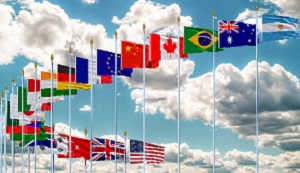
The G20: the symbol of a multipolar and interdependent world The chronic crises of the international economy and finance are at the origin of an institutionalization of global governance beyond the simple UN framework. The relevance of the framework offered by the Security Council has not withstood the changing balance of power on the international scene. The situation has changed with the end of the Cold War and the emergence of new powers in a multipolar and interdependent world. The creation of the G20 expresses the desire to adapt global governance to the changing international balance.The G20 allows for a more open, balanced and representative inter-state and multilateral exchange. The G20 is made up of the world’s top 20 economies, which account for about 90% of global GDP, while the G8 economies account for less than 60%. The meeting of Western and emerging powers reinforces the legitimacy of this new instrument of global governance, even if their own interests remain mostly contradictory.Despite the structural change, the composition of the G20 remains unbalanced. The Western world is over-represented, while some regions of the world are almost absent. The weight of Western European states (Germany, France, United Kingdom and Italy), the European Union and North America (United States and Canada) testifies to this Western overrepresentation.v The affirmation of emerging powers is reflected in the participation of three Central/South American countries (Mexico, Brazil and Argentina) and six Asia-Pacific states (China, India, Japan, Indonesia, South Korea and Australia). Africa (South Africa), the Middle East (Saudi Arabia and Turkey) and continental Asia (Russia) are under-represented. The primary criterion for representation is economic and does not follow a logic of democratic justice.
The new dynamics of global finance
A rebalancing by emerging countries? According to Jacques de Larosière, in his now famous article published in 2008 the world economy is increasingly financially integrated and capital movements between emerging and “advanced” countries have become massive. What are the medium-term consequences of this integration? To what extent has the world’s financial power not already shifted from the “industrialized” world to that of the emerging countries with a balance of payments surplus? The following reflections will be organized around three themes: in recent years, the accumulation of spectacular current account surpluses by emerging countries has contributed to a profound change in the distribution of external reserves in the world; the consequences of these changes on global “financial power” must, however, be assessed in a nuanced manner; the international monetary system is far from having adapted to the new global financial situation. These figures are of considerable economic significance: the US deficit reached 6.2% of its gross domestic product (GDP) in 2006 (5.7% estimated for 2007). As for China’s surplus, it represented 9.4% of its GDP in 2006 (11.7% estimated for 2007). These orders of magnitude represent historical records and reflect, in truth, a paradoxical situation. Traditionally, industrialized countries had balance of payments surpluses and exported their surpluses to developing countries. Today, we are witnessing the opposite phenomenon: it is the so-called “emerging” countries that have become the creditors, if not of the industrialized world as a whole (the European Union is in balance and Japan has a surplus), of the United States, whose current account deficit is entirely offset by capital inflows from emerging countries. Spectacular surpluses for emerging countries The extent of the phenomenon The following table provides a measure of the major changes in the distribution of global balance of payments deficits and surpluses over the past decade. These figures are of considerable economic significance: the US deficit reached 6.2% of its gross domestic product (GDP) in 2006 (5.7% estimated for 2007). As for China’s surplus, it represented 9.4% of its GDP in 2006 (11.7% estimated for 2007). These orders of magnitude represent historical records and reflect, in truth, a paradoxical situation. Traditionally, industrialized countries had balance of payments surpluses and exported their surpluses to developing countries. Today, we are witnessing the opposite phenomenon: it is the so-called “emerging” countries that have become the creditors, if not of the industrialized world as a whole (the European Union is in balance and Japan has a surplus), of the United States, whose current account deficit is entirely offset by capital inflows from emerging countries. Emerging countries have three quarters of the world’s reserves The increases in the external reserves of these countries over the past decade (thanks in large part to successive current account surpluses) are striking. As a result of these changes, the total amount of reserves held by emerging countries exceeds $3 trillion (compared to less than $1 trillion in 2000) and represents 72% of world reserves (compared to 59% in 2000). Thus, China today holds more than 1.4 trillion dollars with currently a monthly increase of around 40 billion dollars (Bn$). It has thus become the world’s leading investor. This is a profound change in the international financial balance. The United States is now a net debtor against countries like China which enjoy a strong creditor position. These changes benefit emerging economies in many ways This mass of reserves at the disposal of emerging countries offers them significant advantages:it provides the liquidity and security that Asia lacked during the 1997 financial crisis; By allowing loan repayments, it loosens the constraint of external debt which, until recent years, limited these countries’ room for manoeuvre (and even subjected them to the “conditionality” of the International Monetary Fund [FMI]).It helps stabilize the financial markets of these countries, whose exchange rates were previously very sensitive to the volatility of capital movements, a volatility itself exacerbated by the low level of external reserves in many of these countries;It partly explains – at a time when the economies of the industrialized countries, and in particular the United States, are beginning to slow down – the continued strong growth in the emerging world, a growth that is undoubtedly less dependent today on variations in the economic cycle of the “advanced” countries than was the case seven or eight years ago. The rise of the middle classes and the growth potential of domestic consumption in these countries make their economies less directly dependent on external conditions. However, a prolonged recession in the United States would have a significant impact on emerging countries because of the reduction in imports from the United States; It gives emerging countries an instrument of power, or even pressure, through the choice of ways to hold their balance of payments surpluses (reserves invested in Treasury bills or acquisitions of various assets on the financial markets of advanced countries). Despite these advantages, locking up a large portion of their savings in reserves with relatively low returns represents a significant “opportunity cost” for these countries. Investing a significant portion of these surpluses in their own economies that are experiencing high growth rates would, no doubt, be wise [1][1]In addition, sterilizing intervention (currency purchases)… in the long run, and would reduce the amount of current surpluses. The reasons for this reversal They can be briefly described as follows: The United States has followed an expansionary monetary policy for at least a decade, which has resulted in low interest rates and encouraged domestic consumption. Thus, domestic savings (especially household savings) did not finance the country’s investment needs. This shortfall in savings (reflected in the U.S. current account deficit) required the use of external capital. This capital came largely from Japan and especially from the emerging countries, which for their part had a “savings surplus”; But if emerging countries have been able to accumulate surpluses, it is also because they have significantly improved their own economic management. Indeed, in recent years, many emerging countries have put their public finances in order and strengthened their banking systems