Asian Infrastructure Investment Bank
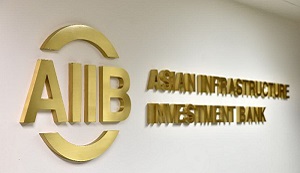
The Asian Infrastructure Investment Bank(BAII; English acronym: AIIB), is a investment bankproposed by the People’s Republic of China in order to compete with the International Monetary Fund (IMF), the World Bank and the Asian Development Bank1 to address the growing need for infrastructure in Southeast Asiaand Asie centrale. This bank is part of the New Silk Road strategy developed by China. BAII’s activities As of January 2020, the BAII has 102 member countries and potential members, including 57 founding members including Australia, China, France, Germany, India, Italy, South Korea, and the UK. As of January 2020, BAII has approved over $12 billion in funding for 64 projects and maintains a list of proposed projects. BAII has received AAA credit ratings from S&P, Moody’s and Fitch. The BAII positions itself as a « lean, clean and green » institution. It maintains this vision in the projects it funds and in its organizational structure, including a commitment to a lean staffing model and a non-resident board. The BAII has adopted the operating framework, governance structures and best practices of existing international financial institutions. For example, in March 2017, the BAII adopted the list of individuals and companies sanctioned by all MDBs. The BAII has also established a set of rigorous policies and guidelines, including a Risk Management Framework and an Environmental and Social Framework to support the achievement of social and environmental sustainability outcomes. History Established in January 2016 and located in Beijing, the Asian Infrastructure Investment Bank (IIB) is a multilateral development bank (MDB) focused on economic development through infrastructure financing in Asia. With total capital of US$100 billion and a focus on sustainable infrastructure, transnational connectivity, and private capital mobilization, the IAB complements other development efforts in the region The idea of creating this bank was first mentioned in October 2013, during a visit by Chinese President Xi Jinping to Indonesia. The objective is to promote the development of Asian countries and regional economic integration by meeting infrastructure needs. It is also about building international financial institutions that are less dependent on the United States and strengthening the role of regional actors in decision-making. Emerging countries feel under-represented in existing financial institutions. The reform will have increased China’s voting rights from 4 to 6.4 per cent, which would have placed it just behind Japan but still far behind the United States, whose share would have decreased only slightly from 17.7 to 17.4 per cent. This would have allowed the BRICS countries to be among the 10 countries with the highest quota share, at the expense of Canada in particular. Although signed by U.S. President Barack Obama in 2010, Republicans in the U.S. Congress refused to ratify this International Monetary Fund 2,3 (IMF) reform bill. This blocking is an important element that explains the success of EBIT4,5,6. In general, the BAII, on paper, is trying to repair perceived flaws in the World Bank, the Asian Development Bank, and other development institutions that have been criticized by China for being too unwieldy and too controlled by the United States and other rich nations 7. In 2014, the U.S. voting power in the IMF 8 and World Bank 9 was 16.75% and 16.21%, respectively (only 3.81% and 4.85% for China). This gives the United States a de facto veto power. For the Asian Development Bank, the voting rights of the United States and Japan are 15.56% and 15.67% respectively and 6.47% for China. In contrast, no single country will have veto power in the new BAII 10. This change in voting rights was the key to gaining European support. In October 2014, a ceremony to launch the facility was held in Beijing. Twenty-one countries sign a memorandum of understanding to build the Asian Infrastructure Investment Bank: ChinaIndia, the Thailand, the Malaysia, Singapore, the Philippines, the Pakistan, the Bangladesh, the Brunei, the Cambodia, the Kazakhstan, the Kuwait, the Laos, the Burma, the Mongolia, the Nepal, theOman, the Qatar, the Sri Lanka, theUzbekistan and Vietnam11. Indonesia signed the MOU in November 2014 and became the 22ndfounding country. These countries decide to offer the possibility to other countries to become founding members, subject to acceptance by the members already present, by submitting an application before 31 March 2015. On March 11, 2015, Luxembourg was the first non-regional country to announce its desire to become a founding member of the Bank. The next day, the United Kingdom, followed by France, Germany and Italy announced their desire to become members of the Asian Infrastructure Investment Bank 12. Switzerland did the same a few days later 13 and Russia also announced its agreement in late March 2015 14. As for the 57 member countries, Japan is the only major economy in Asia not to apply for membership. Taiwan also requested it, but it was rejected. Even North Korea has applied for membership, but much more economic transparency would have been needed for it to join the bank. Almost all of Western Europe, except Ireland, has officially joined the BAII. The United States, Canada and Mexico have all refused to join, with Washington being particularly critical of the new project, including lobbying its allies not to join. Fourteen European countries – including Great Britain, France and Germany – joined the project in scattered order. For researcher Christophe Jaffrelot, director of research at CERI in Paris, « Beijing will probably manage to forge alliances that will allow it to enjoy a majority coalition within the BAII. But not playing along with this initiative would have been even more counterproductive 2. » On December 19, 2018, the Board of Directors of the Asian Infrastructure Investment Bank (AIIB), validated the application of six new members, including Algeria, Ghana, Libya, Morocco, and Togo 15. On March 19, 2018, Canada officially joined the BAII with a 2-year term as one of 12 directors on the BAII Board of Directors starting in July 2018 16. Geopolitical considerations and governance In terms of geopolitics, all the BRICS states – Brazil, Russia, India, China and South Africa – have joined
The bank of bric, new avatar of a multipolar world order
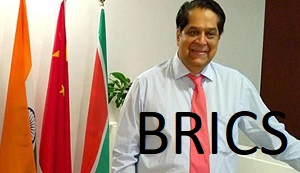
Quite a symbol: 70 years after the Bretton Woods conference, which gave birth to the IMF and the World Bank, the sixth BRICS summit (Brazil, Russia, India, China and South Africa) gave birth, on July 15, 2014 in Fortaleza, to a Development Bank and a Reserve Fund. A decisive step in the refoundation of the international economic and political order?With a starting capital of $100 billion each, the two new institutions will have the particularity of granting loans without conditionality and of operating on the basis of a decision-making system in which each member state has equal voting rights. The BRICS have thus taken care to distance themselves from the much-criticized practices of the IMF and the World Bank, whose loans are conditional on macroeconomic and sectoral reforms and whose operation is based on a censal democracy (the more a member state contributes, the more voting rights it has, with a veto right for the United States).Announced in the spring of 2013, the idea of creating a BRICS Bank and Fund did not take long to materialize. The last remaining differences between China and India have been resolved by a compromise: the headquarters of the BRICS Bank will be located in Shanghai, while India will hold the presidency for the first five years. Each of the BRICS will contribute $10 billion to build up a capital of $50 billion, which will be doubled by the time the Bank becomes effective in 2016. While the priority of the loans will be to finance infrastructure in the BRICS, other developing countries may also eventually participate and benefit – Argentina was the first country to officially apply.The reserve fund, officially called the Contingency Reserve Arrangement (CRA), will also have a starting capital of $100 billion, of which China will contribute $41 billion, India, Brazil and Russia $18 billion and South Africa $5 billion. This Fund will aim to curb balance of payments crises by granting short-term credit lines in the event of financial imbalances, and will have the possibility of borrowing on the markets to increase its lending capacity. New avatar of South-South cooperation The creation of a BRICS Bank and Fund is a new illustration of the rise of South-South cooperation, which is itself a reflection of the « tipping point » of the world. Since the early 2000s, more than half of the world’s economic growth has been produced by developing countries, particularly high-growth countries such as China, the other BRICS and East Asian countries. This phenomenon has obviously been exacerbated by the economic recession experienced by industrialized countries following the 2008-2009 global crisis. This has resulted in ever-increasing South-South trade, both in terms of development assistance and in terms of trade and private investment.More than half of world trade is now South-South and nearly 40% of foreign direct investment in the world is by companies from the South – in both cases, the BRICS account for more than half of these flows. It is the increase in China’s trade with developing countries that has been most impressive: between 2000 and 2012, trade between China and Africa increased twenty-fold and between China and Latin America twenty-two-fold! China is now the largest trading partner of 128 countries in the world!The BRICS Bank and Fund is thus part of a broader panorama in which the emerging powers of the South are claiming more weight in the international system and putting an end to the Western monopoly on development financing. Several initiatives have been taken in the past by emerging countries: As early as 2000, the East Asian countries (ASEAN+3) created a regional reserve fund, called the « Chiang Mai Initiative », which was presented as a regional complement to the IMF; in 2007, the Latin American countries announced the creation of a Bank of the South, which never came into force; from 2009 onwards, the BRICS joined forces to demand a reform of the voting rights of the IMF and the World Bank, with a view to achieving a 50/50 split between developed and developing countries. While a modest reform of voting rights was achieved at the World Bank, this was not the case at the IMF, following the refusal of the US Congress – even though the reform did not challenge the US veto right. Furthermore, the commitment made in 2009 by the G20 to end the tradition of giving the presidency of the World Bank to an American and that of the IMF to a European has not been respected.It is in this context that the BRICS decided to create their own Bank and Fund. At the same time, China has announced the creation of an Asian Infrastructure Investment Bank, also with a starting capital of $100 billion, to compete with the Asian Development Bank, a subsidiary of the World Bank controlled by Japan and its Western allies. India has been invited by China to become a founding member of this new regional development bank, while in Latin America, the Development Bank of Brazil already provides more loans than the World Bank in the region. Reflecting an increasingly multipolar world order After seeking to reform the policies and decision-making of the IMF and the World Bank, the BRICS decided to create their own institutions, which they present as complementary rather than rivals to the Bretton Woods institutions. It is obviously too early to determine whether these new institutions will prove effective and whether they will make a lasting contribution to the construction of a new international economic and financial order.The BRICS is a very heterogeneous group of countries: countries from different continents, authoritarian regimes and democracies, secular states and former European colonies, permanent members of the UN Security Council and others who claim such a seat, increasingly industrialized economies and others that continue to depend on raw materials … Some point out that the BRICS lack the glue to maintain real common projects that can draw the contours of an alternative world order.Time will tell whether the results of the two new BRICS institutions
Multipolar finance and investment instruments
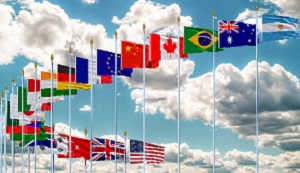
The G20: the symbol of a multipolar and interdependent world The chronic crises of the international economy and finance are at the origin of an institutionalization of global governance beyond the simple UN framework. The relevance of the framework offered by the Security Council has not withstood the changing balance of power on the international scene. The situation has changed with the end of the Cold War and the emergence of new powers in a multipolar and interdependent world. The creation of the G20 expresses the desire to adapt global governance to the changing international balance.The G20 allows for a more open, balanced and representative inter-state and multilateral exchange. The G20 is made up of the world’s top 20 economies, which account for about 90% of global GDP, while the G8 economies account for less than 60%. The meeting of Western and emerging powers reinforces the legitimacy of this new instrument of global governance, even if their own interests remain mostly contradictory.Despite the structural change, the composition of the G20 remains unbalanced. The Western world is over-represented, while some regions of the world are almost absent. The weight of Western European states (Germany, France, United Kingdom and Italy), the European Union and North America (United States and Canada) testifies to this Western overrepresentation.v The affirmation of emerging powers is reflected in the participation of three Central/South American countries (Mexico, Brazil and Argentina) and six Asia-Pacific states (China, India, Japan, Indonesia, South Korea and Australia). Africa (South Africa), the Middle East (Saudi Arabia and Turkey) and continental Asia (Russia) are under-represented. The primary criterion for representation is economic and does not follow a logic of democratic justice.
Douala Reunification Stadium Rehabilitation and Extension Project
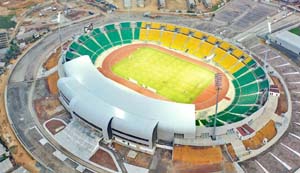
In 2015 the Prime Minister, Head of Government of Cameroon, Philemon Yang, Chairman of the Organizing and Preparatory Committee of the African Cup of Nations 2016 and 2019 in Cameroon had mandated Jean Tele Udimba, President of the Diplomat Investment Group to mobilize 300 million dollars and seek Canadian firms for the rehabilitation and extension of the Reunification Stadium in Douala and other related infrastructure with a capacity of 39,000 seats as well as the renovation of the Roumdé Adjia Stadium in Garoua with a capacity of 25,000 people. On the recommendation of the Diplomat Group, a consortium was created by SODEVI International with the following firms (Canadian Commercial Corporation, Magil Construction, Aedifica) in order to execute the work. Given the deadlines, the consortium only took care of the Douala Reunification Stadium and other infrastructures.
Green, social and sustainable bond market outlook for 2022: everything falls into place

The volume of green, social and sustainable bonds issued in 2021 was higher than expected and Crédit Agricole CIB’s experts forecast a 50% increase in 2022. Climate change is now a top priority on the agenda of all stakeholders. All energies are turned in the same direction, and at a steady pace, to make the energy transition a key component in the capital markets. The pace of sustainable emissions is accelerating The volume of sustainable issuance – green, social, sustainable and Sustainability-linked – in 2021 was higher than expected. 780 billion in mid-November(excluding US government and federal agency bond issues and US mortgage issues), an increase of almost 90% over last year. This growth was mainly driven by corporate issues, which accounted for nearly 60% of the volume issued. Product diversification was the main driver of growth in 2021 and allowed many issuers to enter the sustainable bond market: Green bond issues remain in the majority, accounting for half of all sustainable issues; Sustainability-linked Bonds (« SLB ») have allowed new issuers and new sectors to enter the sustainable bond market. Mainly issued by non-financial corporates, they now account for about 10% of cumulative sustainable issuance since the beginning of the year, whereas they were still negligible last year; The volume of social programming has decreased compared to 2020, which had experienced strong growth in response to the pandemic. The euro remains the main issuing currency and accounts for half of all sustainable issues. Nearly €1 trillion in bond issues by 2022 Our projections for sustainable bond issuance show that corporates, sovereigns and agencies will continue to demonstrate that they are taking steps to combat climate change through a deep, liquid, and diversified sustainable bond market, and by seeking financing for this purpose through these instruments. The estimated supply of sustainable bonds is expected to increase by 50% in 2022, to €1.2 trillion. GLA is expected to support this growth and account for 20% of future sustainable supply. The share of Euro-denominated issues is expected to decline to about 45%, while US dollar-denominated issues are expected to exceed 35% of total sustainable supply. Green bonds are expected to remain the most issued product, representing about 52% of the supply. Although today it is largely driven by Europe – thanks to European climate change regulations – political and regulatory developments in other regions could further favor emissions from non-European players and in other currencies. Evolution of sustainable bond issues and estimates for 2022 by type of issuer (in billions of Euros) Overall estimate of sustainable bond issuance by product in 2022 (%) The rise of sustainable bonds and the « greenium » momentum show investor appetite for green bonds over conventional bonds – however, more and more investors are looking beyond bond underlyings to focus on issuer strategies and positioning – the recent development of GLAs also reveals this dynamic. According to Damien de Saint Germain, Head of Credit & Strategy Research at Crédit Agricole CIB: « Over time, we expect climate and energy transition issues to become a key component of the issuer risk premium demanded by investors. Whether it’s politicians, regulators, central banks, investors, companies or rating agencies…All actors are integrating climate issues into their priorities, analytical frameworks and economic models, accelerating the capital markets’ consideration of the effects of this transition. » With a 6.5% market share at the end of 2020 (Bloomberg), Crédit Agricole CIB is one of the leaders in the green, social and sustainable bond market. Crédit Agricole CIB is a long-term player committed to promoting green finance with a coherent organization within the teams, from creation to distribution. Source : www.ca-cib.fr/pressroom/actualites/perspectives-marche-obligations-vertes-sociales-durables-pour-2022
Investing in emerging markets

Aim for the long term. With their high volatility, emerging markets are sometimes shunned by investors. Yet they offer good return opportunities, provided due diligence is done to invest wisely. Interview with Vincent Dostie, President of Mount Murray Investment, a firm that has been investing in emerging markets for several decades. After a very good year in 2020, emerging markets are lagging a little in 2021. « Overall, the annual return level is pretty close to zero. Compared to the very strong U.S. economy, investors may be disappointed. However, in terms of valuation, the picture is more positive. Corporate profits are up. In most countries, the pandemic has not prevented the economy from reopening, » explains Vincent Dostie. He gives the example of China, which despite an MSCI Emerging Markets Index at -16%, offers good investment opportunities. « Chinese companies have continued to perform, making valuations attractive, » he says. According to him, an investor should devote at least 5% of his portfolio to emerging market equities. And you need to invest for at least 10 years, » he recommends. The binary approach of investing and divesting based on the rise and fall of stocks is not a winning strategy in our opinion. These fluctuations are difficult to predict accurately. These are economies that, while less diversified, are still at the stage of making big plans. This means that there can be ups and downs a little more frequently. It’s important to stay the course. » « In these countries, there are companies that are able to become global leaders like Samsung, » he adds. And there will be more and more of them, especially in services, be it engineering, IT or financial services offered by fintechs. Those doing online transactions are going to become less and less reluctant to use technologies that come from emerging countries. These companies are going to be well positioned to serve their own countries and even export. » Growing markets Which of the 20 or so emerging countries in the MCSI should be on investors’ radar? India is a fascinating country, and its economy is relatively independent of what is happening in other emerging countries, » says Vincent Dostie. The population is very young and very large, so the level of consumption is high. With the development of new technologies, it is able to move forward very quickly on the world stage. And because it is relatively self-sufficient economically, India should have the best economic growth in the world in the coming years. In terms of market prices, Russia is another country that had a very good year in 2021, according to Vincent Dostie. It’s not a country you think about investing in at first because the governance is questionable, » he says. While the Russian economy is growing, the market has been shunned by global investors because of the economic measures taken by the United States. Yet the market’s long-term valuations are particularly attractive. It’s not a dominant country in our portfolio, but relative to the benchmark, we were overweight and our investments performed well this year. » Brazil is another country to consider. People like to say that this is an economy with a bright future behind it, but in fact it has a bright future, » says Vincent Dostie. Brazilian companies, especially those that export, will generate good profits. You just have to have the nerves to get through the next year of presidential elections. It’s a country we’re slightly overweight on right now. » Are there any countries to avoid? Not really, » he says. There are countries where we are more neutral, that we have underweighted like China because of the uncertain political situation that worries investors. We’re cautious by staying present in defensive sectors like healthcare, consumer durables or green energy-related technologies like solar panels. »
War in Ukraine: negative impact on global growth in 2022, increased risks for developing countries (United Nations, McKinsey)
Unctad has lowered its forecast for global economic growth in 2022 due to the war in Ukraine and the normalization of economic policies in advanced countries, two factors whose effects will be felt in almost all countries and particularly in developing economies. McKinsey attempts to assess the impact of the war on the Eurozone economy by exploring various scenarios for the evolution of the conflict and the responses of agents. – In the update of its Trade and Development report, UNCTAD, the UN body in charge of trade and development, is revising its global economic growth forecast for 2022 downwards, expecting global GDP to grow by 2.6%, compared to 3.6% in its November 2021 forecast. Due to the war in Ukraine and the macroeconomic policy changes of the past few months, virtually no country will be immune to a deteriorating near-term outlook, although a few will benefit from higher prices for the commodities they export. The growth outlook has been revised downwards, firstly for Russia(by -9.6 points), which will experience a deep recession (-7.3% in 2022) even if the conflict ends quickly. But it has also been revised downwards for the other regions of the world and above all for Central Asia (growth expected to be +0.2% in 2022, i.e. a revision of -2.9 points), followed by South Asia (+4.0%, -1.7 points) and South-East Asia (+3.4%, -1.3 points), the European Union (+1.6%, -1.7 points), of which -1.8 points for Germany and -1.0 points for France, and Africa (-1.1 points). North America (-0.6 points) and Latin America (-0.3 points) would suffer less. The report stresses that the conflict will accentuate the gaps between countries, already noted during the health crisis and then in a « post-Covid » economic recovery at several speeds, at the expense of developing countries. It highlights several risks that concern them primarily. In particular, the conflict is likely to reinforce the trend towards monetary tightening in the advanced countries (the report wonders about a « taper tantrum » scenario as in 2013) while public spending cuts are already planned with the end of the exceptional support programs. The war also creates uncertainty in key international markets (an environment of volatile capital flows, exchange rate instability and rising borrowing costs). This increases the risk of serious external debt payment difficulties for the most fragile countries. UNCTAD estimates that developing countries will need $310 billion to service their external debt in 2022 Source : http://www.rexecode.fr/public/Analyses-et-previsions/Veille-documentaire/Document-de-la-semaine/Guerre-en-Ukraine-impact-negatif-sur-la-croissance-mondiale-en-2022-risques-accrus-pour-les-pays-en-developpement-Nations-Unies-McKinsey Does Russia have the finances to wage war? By Omar Fassal Europe is about to go up in flames. Russia has amassed more than 100,000 troops on its border with Ukraine, and is demanding concrete commitments to curb NATO expansion. This organization, created during the Cold War to protect the continent from a Russian invasion, has gradually taken on new members. But Russia is seriously disturbed by this further expansion. It clearly demands that Nato commit itself never to integrate Ukraine. Americans and Europeans are torn between accepting Russian demands for military de-escalation and supporting a former USSR country that wishes to escape Russian influence. Why is this confrontation dangerous and neither side seems to be giving ground? Because it initiates what will be the new world order. Indeed, the United States, the global hyperpower of the 21st century, is in retreat, unable to play the omnipresent leading role that all empires eventually abandon. The new world order that is taking shape is a multipolar order, with distinct zones of influence. The Atlantic axis dominated by the Americans, the Pacific axis dominated by the Chinese, and the Eastern European axis dominated by the Russians. In the Russian conception, this new order requires that each power respects the limits of the other, and does not try to influence its area. Russia is thus trying to set a precedent: to enforce its zone of influence. If Russia succeeds in this, it will mark a one-way progression towards this multipolar world. Tomorrow, China will be tempted to follow the same muscular approach to settle the dispute over Taiwan. Japan and South Korea, long allied with the Americans for protection, will certainly change sides by moving closer to China, tipping the Pacific axis. Russia has impressive military resources. With 1 million soldiers and 2 million reservists, 1,531 fighter planes, 538 combat helicopters, 13,000 tanks, 214 warships (including 64 submarines), the Russian army is without a doubt one of the most sophisticated in the world. On the other side, the Ukrainian army has professionalized since the 2014 invasion of Crimea, receiving training and $2.5 billion in aid from the Americans, as well as arming civilians for urban guerrilla warfare. Ukrainians promise that they will not throw in the towel in 4 days, as was the case in 2014. But what history teaches us is that war is not just about shells and ammunition; war is primarily about money. Money is the sinews of war. So, can Russia afford a war? The issue is all the more important because the West has clearly stated that it will not intervene militarily to defend Ukraine. In the event of an invasion, they have promised to retaliate by launching « massive economic sanctions without precedent, » according to Boris Johnson. This makes the question even more legitimate: does Russia have the strength to bear the financial fallout? We have to admit that the Russian economy is doing quite well. Russia has actually strengthened its economic independence since 2014 (when a first round of economic sanctions was imposed following the invasion of Crimea). Proof of this is the country’s resilience during the Covid crisis, with real GDP declining by only -2.9% in 2020. Inflation is controlled at 4.8% in 2022. Russia is pursuing a very prudent fiscal policy: a surplus of 3% of GDP in 2018 and 2% in 2019, a deficit of -4% in 2020 and -0.5% in 2021, and now a new budget surplus of 0.1% of GDP expected for 2022 (planned before the military runaway we are experiencing). This fiscal policy has allowed Russia to contain
The Concept of Economic Diplomacy in Quebec
business diplomacy and facilitates the rapprochement between the business and diplomatic communities. It is in this context that Diplomat Investment Magazine has set up an innovative approach of targeted business communication aimed exclusively at major financial leaders and decision-makers, investors and economists in emerging countries. The Magazine focuses on the major movements of capital and investment on a global scale through the new business and economic diplomacy. More than a simple magazine, Diplomat Investissement Magazine has become a very influential information and communication tool that promotes strategic investments and diplomacy. Its philosophy consists in marrying the diplomatic world with that of investments and high finance. To put this concept of economic diplomacy into practice, Mr. Jean Tele Udimba founded in 1998 in Montreal a renowned organization, the Canadian Ambassadors and Business Club for Africa (CAECA), where he held the position of Executive Director. The Board of Directors of this Club was composed of 5 African ambassadors accredited to Canada (South Africa, Algeria, Kenya, Cameroon and Senegal) as well as 10 major Canadian companies (SNC Lavalin, Dessau, Lambert Somec, TecsultAlacan, Hydro-Québec, Bombardier, Groupe Chagnon, Canadian Manufacturers and Exporters, etc.). This club has now become the Canadian Council for Africa. One of the major objectives of the Club was to create investment funds for African and Canadian governments and businesses working in Africa. The outcome of this process allowed the Canadian government to create an Investment Fund for Africa (IFCA), which was capitalized at $500 million.
The new dynamics of global finance
A rebalancing by emerging countries? According to Jacques de Larosière, in his now famous article published in 2008 the world economy is increasingly financially integrated and capital movements between emerging and « advanced » countries have become massive. What are the medium-term consequences of this integration? To what extent has the world’s financial power not already shifted from the « industrialized » world to that of the emerging countries with a balance of payments surplus? The following reflections will be organized around three themes: in recent years, the accumulation of spectacular current account surpluses by emerging countries has contributed to a profound change in the distribution of external reserves in the world; the consequences of these changes on global « financial power » must, however, be assessed in a nuanced manner; the international monetary system is far from having adapted to the new global financial situation. These figures are of considerable economic significance: the US deficit reached 6.2% of its gross domestic product (GDP) in 2006 (5.7% estimated for 2007). As for China’s surplus, it represented 9.4% of its GDP in 2006 (11.7% estimated for 2007). These orders of magnitude represent historical records and reflect, in truth, a paradoxical situation. Traditionally, industrialized countries had balance of payments surpluses and exported their surpluses to developing countries. Today, we are witnessing the opposite phenomenon: it is the so-called « emerging » countries that have become the creditors, if not of the industrialized world as a whole (the European Union is in balance and Japan has a surplus), of the United States, whose current account deficit is entirely offset by capital inflows from emerging countries. Spectacular surpluses for emerging countries The extent of the phenomenon The following table provides a measure of the major changes in the distribution of global balance of payments deficits and surpluses over the past decade. These figures are of considerable economic significance: the US deficit reached 6.2% of its gross domestic product (GDP) in 2006 (5.7% estimated for 2007). As for China’s surplus, it represented 9.4% of its GDP in 2006 (11.7% estimated for 2007). These orders of magnitude represent historical records and reflect, in truth, a paradoxical situation. Traditionally, industrialized countries had balance of payments surpluses and exported their surpluses to developing countries. Today, we are witnessing the opposite phenomenon: it is the so-called « emerging » countries that have become the creditors, if not of the industrialized world as a whole (the European Union is in balance and Japan has a surplus), of the United States, whose current account deficit is entirely offset by capital inflows from emerging countries. Emerging countries have three quarters of the world’s reserves The increases in the external reserves of these countries over the past decade (thanks in large part to successive current account surpluses) are striking. As a result of these changes, the total amount of reserves held by emerging countries exceeds $3 trillion (compared to less than $1 trillion in 2000) and represents 72% of world reserves (compared to 59% in 2000). Thus, China today holds more than 1.4 trillion dollars with currently a monthly increase of around 40 billion dollars (Bn$). It has thus become the world’s leading investor. This is a profound change in the international financial balance. The United States is now a net debtor against countries like China which enjoy a strong creditor position. These changes benefit emerging economies in many ways This mass of reserves at the disposal of emerging countries offers them significant advantages:it provides the liquidity and security that Asia lacked during the 1997 financial crisis; By allowing loan repayments, it loosens the constraint of external debt which, until recent years, limited these countries’ room for manoeuvre (and even subjected them to the « conditionality » of the International Monetary Fund [FMI]).It helps stabilize the financial markets of these countries, whose exchange rates were previously very sensitive to the volatility of capital movements, a volatility itself exacerbated by the low level of external reserves in many of these countries;It partly explains – at a time when the economies of the industrialized countries, and in particular the United States, are beginning to slow down – the continued strong growth in the emerging world, a growth that is undoubtedly less dependent today on variations in the economic cycle of the « advanced » countries than was the case seven or eight years ago. The rise of the middle classes and the growth potential of domestic consumption in these countries make their economies less directly dependent on external conditions. However, a prolonged recession in the United States would have a significant impact on emerging countries because of the reduction in imports from the United States; It gives emerging countries an instrument of power, or even pressure, through the choice of ways to hold their balance of payments surpluses (reserves invested in Treasury bills or acquisitions of various assets on the financial markets of advanced countries). Despite these advantages, locking up a large portion of their savings in reserves with relatively low returns represents a significant « opportunity cost » for these countries. Investing a significant portion of these surpluses in their own economies that are experiencing high growth rates would, no doubt, be wise [1][1]In addition, sterilizing intervention (currency purchases)… in the long run, and would reduce the amount of current surpluses. The reasons for this reversal They can be briefly described as follows: The United States has followed an expansionary monetary policy for at least a decade, which has resulted in low interest rates and encouraged domestic consumption. Thus, domestic savings (especially household savings) did not finance the country’s investment needs. This shortfall in savings (reflected in the U.S. current account deficit) required the use of external capital. This capital came largely from Japan and especially from the emerging countries, which for their part had a « savings surplus »; But if emerging countries have been able to accumulate surpluses, it is also because they have significantly improved their own economic management. Indeed, in recent years, many emerging countries have put their public finances in order and strengthened their banking systems
Business meeting bringing together the financial community and serval business people from Quebec and Canada with Chadian President Idriss Déby Itno
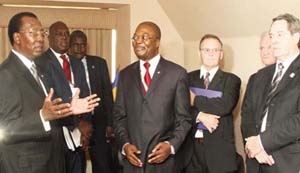
In the margin of the XIIth the Francophonie Summit held in Quebec City in October 2008, the Diplomat Investment Group organized a meeting bringing together several business people from Quebec and Canada to raise $800 million to finance oil and mining projects in Chad. The event allowed about 50 business people to hear President Déby recount the latest events in Chad and, above all, to learn about the economic and social environment prevailing in Toumaï country. Mr. Déby Itno confirmed the return of peace and stability as a guarantee of development. President Déby praised his people and their determination to develop and thus facilitate access to the country for foreign firms, including Canadian ones, so that they can prosper and provide Chadians with a certain expertise. He also announced changes and additions to the Investment Code that would allow foreign companies to enjoy tax exemptions and the new socio-economic landscape that animates Chad. Business opportunities in Chad are numerous, particularly in the fields of oil, mining, infrastructure, housing, health, and education. He therefore invited Canadian business people to Chad in the coming months. Business people came out of their meeting with the president happy and confident of the role they can play in the economic development of this country that has been waiting for its turn for too long now. Memoranda of understanding were signed between Canadian firms and the Chadian government in the oil sector. Mr. Adam Béchir, Chad’s ambassador to Canada with residence in Washington, was charged by the President of the Republic to follow up with Canadian firms based in Toronto.